

As a professional supplier of cable materials, ONE WORLD provides a full range of optical cable raw materials, including high-quality single-mode optical fiber. As the core transmission medium of modern communication networks, single-mode fiber is widely used in long-distance and high-speed communication systems due to its high bandwidth, low attenuation, and long transmission distance.
In this article, we explore the wavelength and transmission characteristics of single-mode optical fiber from a material perspective, providing useful insights for material selection and cable manufacturing.
1. Basic Structure of Single-Mode Optical Fiber
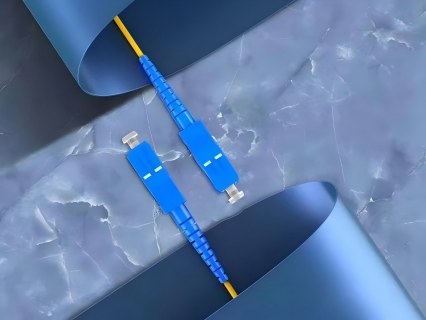
Single-mode optical fiber consists of a core and cladding. The refractive index of the core is higher than that of the cladding, allowing light to propagate through total internal reflection within the core. This structure supports only one propagation mode (fundamental mode), effectively eliminating modal dispersion and improving transmission quality.
The core diameter typically ranges from several micrometers up to about 10 μm, while the cladding diameter is approximately 125 μm.
2. Importance of Wavelength
Wavelength plays a critical role in optical fiber communication. The commonly used transmission windows include:
O-band (1260–1360 nm)
C-band (1530–1565 nm)
L-band (1565–1625 nm)
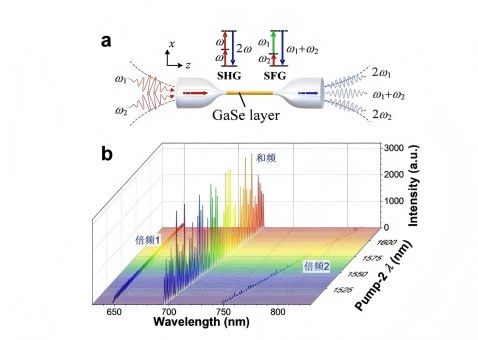
Within these wavelength ranges, optical fibers exhibit excellent transmission performance. Among them, the C-band features relatively low attenuation (as low as approximately 0.2 dB/km), making it the primary operating window for long-distance, high-speed optical communication systems.
3. Key Transmission Characteristics
Attenuation Coefficient:
The attenuation coefficient, measured in dB/km, is a key parameter used to evaluate transmission loss. It mainly results from material absorption and scattering. In the C-band, attenuation can be as low as approximately 0.2 dB/km, while it is slightly higher in the O-band.
The single-mode optical fiber supplied by ONE WORLD is manufactured using high-purity materials and stable processes, ensuring consistent attenuation performance within standard specifications for reliable long-distance transmission.
Dispersion Characteristics:
Dispersion refers to the difference in propagation speeds of light at different wavelengths, which leads to signal broadening. By optimizing material composition and structural design, fibers can be engineered with different dispersion properties to meet diverse communication requirements.
Cut-off Wavelength:
The cut-off wavelength is the minimum wavelength at which single-mode transmission can be maintained, typically in the range of 1260–1300 nm. Below this value, higher-order modes may propagate, affecting signal stability. ONE WORLD strictly controls the cut-off wavelength to ensure stable single-mode performance within the specified operating range.
Mode Field Diameter (MFD):
The mode field diameter describes the distribution of the optical field in the fiber core and affects coupling efficiency and connection performance. Different MFD specifications are available to meet various system design and packaging requirements.
4. Optimization of Transmission Performance
The transmission performance of single-mode optical fiber can be further improved by optimizing material purity and manufacturing processes such as MCVD (Modified Chemical Vapor Deposition). These improvements help reduce impurity absorption and structural defects, resulting in lower attenuation and better dispersion characteristics.
ONE WORLD continuously follows industry developments and works closely with reliable upstream partners to provide stable and high-quality optical fiber products.
5. Conclusion
The wavelength and transmission characteristics of single-mode optical fiber directly determine the performance of optical communication systems. A clear understanding of these key parameters helps optimize fiber network design and meet the growing demand for high-speed and high-capacity data transmission.
As a trusted partner in cable materials, ONE WORLD is committed to supplying stable and reliable single-mode optical fiber to support your communication projects. Feel free to contact us for more product information and technical support.
Post time: Mar-20-2026