

Nylon (Polyamide, PA), as a high-performance engineering plastic with excellent comprehensive properties, is one of the key materials commonly used in high-end wire and cable. It is primarily applied in sheathing and functional structural layers, and can also be used for insulation in specific scenarios.
Its outstanding abrasion resistance, oil resistance, mechanical strength, and heat resistance make nylon a preferred material for cable design in demanding operating conditions. It is widely used in power cables, communication cables, automotive wiring harnesses, robot cables, drag chain cables, reel cables, and other fields, providing long-term, reliable structural and environmental protection for cables.
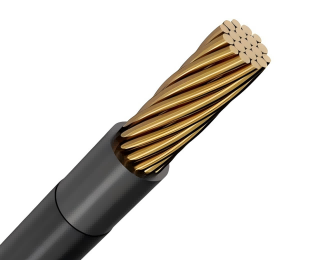
I. Core Advantages: Why Choose Nylon as a Cable Material?
The unique combination of properties of nylon materials directly impacts the overall performance of cables in terms of mechanical, environmental, and service life aspects.
1. Excellent Mechanical Properties, Ensuring Cable Structural Reliability
Superior Abrasion Resistance: High surface hardness and low coefficient of friction make nylon particularly suitable for applications involving frequent movement, bending, and dragging, such as robot cables, drag chain cables, and automation equipment cables. As a sheathing material, nylon can significantly reduce wear rates and extend cable service life.
High Strength and Good Toughness: Nylon exhibits high tensile strength and impact resistance, effectively protecting internal conductors and insulation layers from crushing, stretching, and mechanical shock during installation and operation.
Good Thin-Wall Capability: Nylon materials offer stable extrusion performance, making them suitable for thin-wall sheath design. While maintaining equivalent mechanical protection, it allows for reduced cable outer diameter, lower weight, and improved overall flexibility, making it an important material choice for lightweight and highly flexible cables.
2. Outstanding Environmental Tolerance, Broadening Cable Application Range
Good Chemical Resistance: Nylon has good resistance to oils, fuels, lubricants, and various chemical media, making it suitable for automotive cables, construction machinery cables, and industrial control cables in oily environments.
Reliable Heat Resistance: Depending on the grade and application standards, the long-term service temperature of nylon materials typically ranges from 105°C to 125°C, suitable for cable structures near engines, heat sources, or in consistently high-temperature environments.
Capable of Achieving Halogen-Free Flame Retardancy: Through flame-retardant modification, nylon materials can meet halogen-free flame retardancy standards such as UL VW-1 and IEC 60332, suitable for cable applications with high fire safety requirements, such as rail transit, industrial automation, and data centers.
3. Good Processing and Usability Performance
Smooth surface, facilitating cable installation and reducing friction during pulling.
Good dimensional stability, helping to maintain cable structural consistency and long-term reliability.
II. Main Application Forms: The Role of Nylon in Cable Structures
1. As Cable Sheathing (Primary Application)
Single-Layer Nylon Sheath: Commonly used in hook-up wire, internal equipment wiring (e.g., UL1007, UL1015), and automotive low-voltage wiring harnesses, providing basic mechanical protection while ensuring a compact structure.
Dual-Layer or Multi-Layer Composite Sheath Structure: Nylon is often used as the outer sheath, combined with softer inner layer materials such as PVC, TPE, TPU, or XLPE, forming an “externally rigid, internally soft” structural design. This structure is widely adopted in robot cables, servo cables, and highly flexible industrial cables, balancing cushioning performance with high-strength external protection.
2. As Insulation Material (Specific Applications)
In some special scenarios, nylon (e.g., PA12) can be used for thin-layer insulation in automotive sensor cables and special wires due to its good electrical properties, heat resistance, and flexibility. However, in most cable designs, nylon is more frequently used as a sheath or functional layer rather than the primary electrical insulation material.
III. Nylon Material Selection Guide: How to Choose Between PA6, PA66, and PA12?
Different nylon grades have varying performance emphases; selection should be based on the specific application environment.
PA6 (Nylon 6): Offers a good balance of comprehensive performance and cost-effectiveness. Suitable for most industrial cables and control cables requiring abrasion resistance, oil resistance, and mechanical performance.
PA66 (Nylon 66): Compared to PA6, it has a higher melting point, rigidity, and mechanical strength. Suitable for cable applications requiring higher heat resistance or enduring more severe mechanical stress.
PA12 (Nylon 12): Features low water absorption, excellent low-temperature flexibility, and hydrolysis resistance. Suitable for applications with high environmental adaptability requirements, such as highly flexible robot cables, medical device cables, underwater or outdoor applications.
Modified Nylon Materials: By adding flame retardants, toughening agents, or lubricating modifiers, specific requirements for flame retardancy ratings, low-temperature performance, or processing performance can be met, suitable for customized special cable designs.
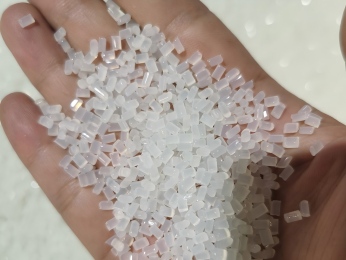
IV. Material Selection Considerations: Balancing Advantages and Limitations
Moisture Absorption Impact: Nylon’s moisture absorption may affect dimensional stability and electrical properties. For humid or outdoor environments, it is recommended to select low-absorption grades (e.g., PA12) or use modified formulations.
Low-Temperature Performance: Standard PA6/PA66 exhibits reduced toughness at low temperatures. For low-temperature applications, choose cold-resistant modified nylon or PA12.
Cost Factor: While the unit price of nylon is higher than PVC and ordinary polyolefins, its advantages in thin-wall design, durability, and service life can often reduce the overall lifecycle cost of the cable.
V. Conclusion: Nylon – An Important Material Choice for High-Performance Cable Engineering
With its excellent abrasion resistance, high strength, oil resistance, good flame retardancy, and thin-wall capability, nylon has become an indispensable sheathing and functional material for high-end cable products such as robot cables, drag chain cables, automotive cables, heat-resistant cables, and flame-retardant cables.
As a professional cable material supplier, we offer PA6, PA66, PA12, and various modified nylon cable compounds. We provide tailored material solutions based on specific cable structure designs and application environments (bending conditions, temperature ranges, media exposure, and flame retardancy requirements), assisting cable engineers and manufacturers in creating more reliable and durable wire and cable products.
Post time: Jan-23-2026