

1. Material Upgrade: From PVC to LSZH Cable Materials
In large public spaces such as shopping malls, metro systems, airports, and hospitals, cables are not only responsible for power transmission but also serve as a critical safety backbone in the event of a fire.
Compared with traditional PVC cable materials, Low Smoke Zero Halogen (LSZH) materials represent a significant upgrade in material performance. LSZH materials are halogen-free (or comply with halogen content limits defined in standards such as IEC 60754). During combustion, they do not release corrosive gases and significantly reduce smoke emission. From a material perspective, this effectively addresses the safety risks associated with conventional halogen-containing cable materials in fire scenarios.
This transition from traditional halogen-containing materials to LSZH cable materials has made LSZH cables a key development direction for modern flame-retardant cables and fire-resistant cable systems.
2. Core Performance Advantages: Flame Retardancy, Low Smoke, and Halogen-Free Mechanism
From a cable materials perspective, the core advantages of LSZH flame-retardant cables lie in three aspects: flame retardancy, low smoke emission, and halogen-free performance.
LSZH cable materials utilize halogen-free flame-retardant systems, such as metal hydroxides or phosphorus-nitrogen-based flame retardants. Under heat exposure, these systems absorb a large amount of heat, dilute combustible gases, and promote the formation of a dense char layer, effectively suppressing flame propagation and reducing dripping.
At the same time, LSZH materials generate significantly less smoke than traditional PVC materials, helping maintain higher visibility in fire conditions and improving evacuation efficiency. In addition, as they are halogen-free, the combustion products are mainly water vapor and carbon dioxide, without releasing toxic or corrosive gases, thereby reducing secondary harm to people and equipment.
These combined properties form the safety foundation of LSZH flame-retardant cables in public infrastructure applications.
3. Key Cable Materials: Building a Multi-Layer Fire Protection System
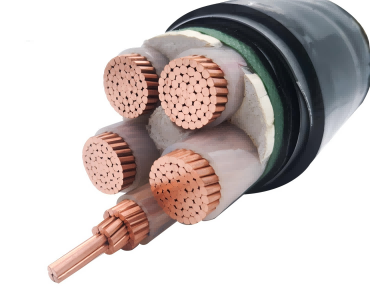
From a cable structure design perspective, the performance of LSZH flame-retardant cables depends on the coordinated application of multiple cable materials.
LSZH compound serves as the outer sheath material and determines the cable’s low-smoke, halogen-free, and flame-retardant performance. LSZH tape is used to enhance structural stability and improve the overall flame-retardant level of the cable.
Phlogopite mica tape is a critical fire-resistant cable material. Under fire conditions (typically around 750–950°C, depending on test standards such as IEC 60331 or BS 6387), it can maintain electrical insulation for a certain period, forming the basis for fire-resistant cable performance.
Water-blocking tape and water-blocking yarn are applied to improve long-term reliability in humid and harsh environments. While not always required for dry indoor applications, they are widely used in underground, direct-buried, and outdoor cable systems.
Through the combined use of these materials, a multi-layer protection system integrating flame retardancy, fire resistance, low smoke, and halogen-free performance can be achieved, meeting international standards requirements.
4. Engineering Applications and Material Performance Requirements
In applications such as large public buildings, rail transit systems, and underground infrastructure, cable materials must not only provide fire safety but also ensure long-term operational reliability.
High-performance LSZH cable materials typically offer excellent mechanical properties (such as abrasion resistance and impact resistance), strong aging resistance, and stable electrical insulation performance. At the same time, they provide good processing performance, supporting high-speed extrusion and large-scale production. These properties are directly determined by material formulation and manufacturing process control, forming the foundation for reliable cable operation.
In terms of compliance, LSZH cables are typically required to meet the following international standards:
Flame retardancy: IEC 60332 series
Smoke density: IEC 61034
Halogen content: IEC 60754
Fire resistance: IEC 60331 or BS 6387
As cable materials continue to evolve toward higher safety and performance, the application of LSZH cable materials, phlogopite mica tape, and water-blocking materials is expected to expand further, creating new opportunities for cable material suppliers in the global market.
Post time: Apr-30-2026