

Moisture protection is essential for the long-term reliability of optical cables. Water ingress into the cable core may lead to signal degradation and reduced service life. Mainstream optical cable water-blocking solutions are generally divided into dry water blocking (Water Blocking Yarn and Water Blocking Tape) and wet water blocking (Cable Jelly filling), each with different mechanisms and application scenarios.
1. Why Do Optical Cables Require Strict Water Blocking?
Optical fibers are sensitive to moisture. Long-term water exposure may cause two major issues:
Hydrogen-Induced Attenuation
In optical cables containing metallic components, humid environments may trigger corrosion reactions that generate hydrogen. Hydrogen molecules can diffuse into the optical fiber glass layer, causing absorption defects and increasing attenuation in the 1310 nm and 1550 nm communication windows, which may affect transmission quality and link stability.
Reduced Mechanical Strength of Optical Fibers
Bare optical fibers contain microscopic surface cracks. Moisture may react with the silica network and gradually expand these cracks under stress, a phenomenon known as Stress Corrosion. Over time, this can reduce tensile and bending strength, increasing the risk of fiber breakage during installation and operation.
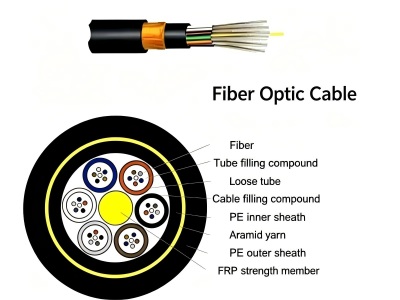
2. Dry Water Blocking: Water Blocking Yarn & Water Blocking Tape
Dry water blocking is commonly used in lightweight optical cables, newly deployed networks, and certain air-blown cable systems. The core material is SAP (Super Absorbent Polymer), which expands upon contact with water to block moisture.
Material Structure
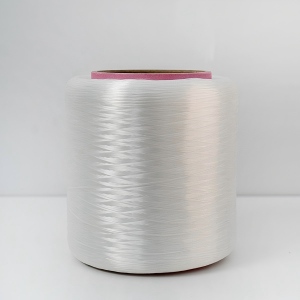
Water Blocking Yarn is typically made from polyester or other high-strength fibers combined with SAP materials to provide both strength and water-blocking performance.
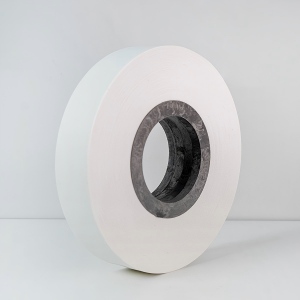
Water Blocking Tape generally uses a polyester nonwoven structure containing high-purity SAP, allowing it to fit closely into cable gaps.
Water-Blocking Mechanism
When water enters the cable core, SAP rapidly absorbs moisture and expands into a gel, filling internal gaps and effectively blocking longitudinal water migration. The gel structure can also adapt to minor cable deformation, helping maintain stable water-blocking performance.
3. Wet Water Blocking: Cable Jelly Filling
Cable Jelly is a traditional wet water-blocking material widely used in outdoor optical cables such as direct-buried and aerial cables.
Material Characteristics
Cable Jelly is typically formulated from base oils, thickeners, and antioxidants. It is hydrophobic, water-insoluble, and offers good sealing, insulation, and temperature resistance.
Water-Blocking Mechanism
During production, Cable Jelly is filled into the cable core and internal gaps to minimize water migration paths. Its hydrophobic nature forms a physical barrier that helps prevent water ingress while suppressing moisture spread along the cable core. It can also help buffer mechanical stress and protect optical fibers.
4. Dry vs. Wet Water Blocking
Dry Water Blocking (Water Blocking Yarn + Tape)
Lightweight, clean, and easy to install. Suitable for air-blown cables, indoor wiring, and lightweight optical cable systems.
Wet Water Blocking (Cable Jelly Filling)
Offers stronger sealing and protection in harsh environments. Suitable for direct-buried, river-crossing, and long-distance trunk optical cables.
5. Conclusion
Water Blocking Yarn and Water Blocking Tape provide dry water blocking by expanding into a gel upon contact with water, making them ideal for lightweight optical cable designs.
Cable Jelly provides wet water blocking by filling cable gaps with a hydrophobic barrier, offering strong sealing performance in demanding environments.
Both systems aim to reduce moisture-related risks such as hydrogen-induced attenuation and stress corrosion, helping ensure the long-term reliability of optical cable systems.
Post time: May-26-2026